
Nirma International Conference on Management (NICOM) is the annual international management conference hosted by Institute of Management, Nirma University. NICOM is a platform for academicians, researchers, and practicing managers to engage in meaningful discussions on contemporary developments and issues related to businesses in the modern era. With a successful history, spanning over 29 years, the upcoming NICOM 2027, scheduled for January 6th to 8th, 2027 will mark the 30th consecutive conference. The theme for NICOM 2027 is :
We live in an era of profound and interconnected global transformation. The traditional foundations of the international political, economic, and institutional order are being reshaped by shifting geopolitical power structures, growing sustainability imperatives, and the rapid acceleration of digital technologies. At the same time, governments, businesses, and societies are confronting three powerful and overlapping forces: geopolitical uncertainty and supply-chain realignment, the urgent transition toward sustainable and net-zero futures, and the disruptive potential of artificial intelligence and digital innovation. These forces do not operate independently; rather, they interact and reinforce one another, creating complex challenges and unprecedented opportunities. Their combined impact demands new approaches to governance, strategy, leadership, and international cooperation. The world is no longer adapting to change within a stable global framework; instead, it is navigating the continuous reconfiguration of an increasingly interconnected and dynamic world order. Understanding and responding to these complexities is essential for building resilient, sustainable, and digitally empowered societies in the decades ahead.
As the world navigates an era of unprecedented transformation, collaboration among academia, industry, government, and civil society has become more critical than ever. The evolving geopolitical landscape, shifting trade alliances, sustainability imperatives, and rapid technological advancements are reshaping the foundations of global development. At the same time, organisations across sectors are being challenged to integrate ESG principles into decision-making, accelerate the transition toward green and circular economies, and address the ethical, social, and economic implications of emerging technologies such as artificial intelligence, Web3, and Industry 5.0. In this dynamic environment, leaders must make informed, agile, and responsible decisions amid increasing complexity and uncertainty.
This conference will bring together scholars, policymakers, practitioners, innovators, and thought leaders from around the world to exchange ideas, share research, and explore solutions at the intersection of geopolitics, sustainability, and digitalization. Through meaningful dialogue and interdisciplinary collaboration, participants will examine emerging challenges, identify opportunities for collective action, and develop frameworks that can guide resilient and inclusive growth. More than a platform for discussion, this conference seeks to help shape the new world order and envision a sustainable, digitally empowered future.
NICOM Ethics Statement
Nirma International Conference on Management (NICOM) upholds principles of ethical behaviour in all academic and professional practices of the conference. We are committed to bringing fairness, respect, and transparency to the generation of ideas and innovations.
All work submitted to NICOM must be your own and must not have been published elsewhere in any form or format. Authors are obligated to acknowledge all sources, contributors, and funding sponsors where necessary, in accordance with international writing and research standards. Papers should NOT be submitted to multiple conferences or journals concurrently. In the event of any possible conflicts of interest, they must be stated in advance to avoid situations related to them.
The peer review process at NICOM is fully anonymous and bias-free. Reviewers are expected to be impartial and offer constructive critique, fully acknowledging the insights of the authors. Reviewers must not gain personally or disclose any information or content from submissions to third parties.
It is important for all participants to understand and appreciate that NICOM is an organization that welcomes and embraces ALL. Discrimination based on color, gender, age, or race will NOT be tolerated. Comments that are discriminatory, harassing, or otherwise inappropriate are not allowed. All participants should adhere to respectful linguistic manners, and contemptuous behavior toward any participant is prohibited.
Any ethical issues, such as cases of misconduct, will be dealt with in a timely manner by the NICOM organizing committee, in compliance with international standards. In line with these principles, NICOM seeks to create value and play a meaningful role within the international scholarly and professional community, reaffirming its status as a reliable source of knowledge and research information.
Link for submission of Abstract/Full Paper Submission Form – NICOM
| PAPER SIZE | A4 |
| FORMAT | .doc/ .docx format only |
| WORD LIMIT | • 5000 words including Abstract, References, Tables and Figures. • Abstract should be in paragraph. |
| PAPER SEQUENCE AND STYLE | 1. First Page: • Title of the paper • Author details 2. Second Page onwards: • Paper Title, Abstract, Keywords (4-5 words) • Full Paper (Main Text) • References |
| AUTHOR(S) DETAILS | • Clearly mention the first author and co-authors’ Name, Designation, Organization, City, State and E-mail address • Font size: 12 • Font Type: Times New Roman • Bold and Centre aligned |
| MARGINS | • Top and Bottom: 1.5 cm • Left and Right: 1 cm |
| LINE SPACING | •1.5 |
| HEADER | NICOM 2027, IMNU, Nirma University •Font Size 10, Times New Roman, Bold, Left aligned, Italics |
| PAPER TITLE | • Font size: 16 • Font Type: Times New Roman • Italics, Bold and Centre aligned |
| MAIN BODY | • Justified • Normal Font • Font type: Times New Roman • 1 blank line to separate paragraphs • Headings: font size 14, bold and left aligned • Sub-headings: font size 12, bold and left aligned • Main body: font size 12 and justified |
| TABLES/FIGURES | • To be numbered and titled • Title: Font Size: 12, Font Type: Times New Roman, Bold and Centre aligned. • All figures should be in Black & White. Color figure/images should be avoided. |
| REFERENCES | • APA style of Referencing • No numbering |
| Conference Dates | January 6 – 8, 2027 |
| Abstract Submission: | September 20, 2026 |
| Abstract Acceptance Notification: | October 01, 2026 |
| Full Paper Submission: | November 15, 2026 |
| Full Paper Acceptance Notification: | December 15, 2026 |
• Selected papers published in the Conference Proceedings
• Opportunity in Nirma University Journal of Business and Management Studies (Spectrum Publishing – a Sage company)
• Discussions ongoing for a Scopus-indexed journal
• Best Paper Awards with cash prizes (Academicians/Industry & Students)
Registration Fees: (Including 18% GST)
| International Delegates (other than SAARC Countries) | USD 148 |
| Academician | INR 4,425 |
| Industry | INR 5,900 |
| Students | INR 2,065 |
| IMNU Alumnus | INR 2,950 |
| Accompanying Guests | INR 2,950 per person |
Registration fee covers conference kit, lunch and dinner. Registration fee is non-refundable. However, change in nomination is permitted on request.
Accommodation: Accommodation on campus will be provided upon request, subject to availability.
Conference Patrons
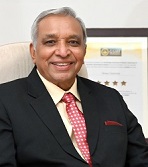
Nirma University
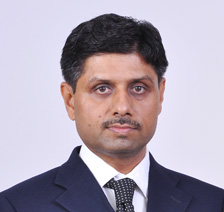
Nirma University
Mr. Arto Sivonen
CEO, MANDAG
Creative Director and Impact Strategist, Finland
Dr. Saurabh Gupta
Professor of Information Systems
Kennesaw State University, United States
Dr. Keyur Thaker
Professor
Indian Institute of Management, Indore
Dr. Namjae Cho
Professor
Graduate School of Business Administration, Hanyang University, Seoul, South Korea
Dr. Harald Friedl
Associate Professor for Sustainability and Ethics in Tourism
F H Joanneum, Austria
Amb Rtn. Anil Trigunayat (IFS Retd)
Former Ambassador of India to Jordan, Libya and Malta
Distinguished Fellow Vivekananda International Foundation and Head of West Asia Group., President, MIICCIA Chamber of Commerce
Mr. Anilkumar Dave
Space Economy Advisor, member of the board, Global Entrepreneurship Network Space (USA), former Head of Unit at Italian Space Agency (ITA).
Dr. Harini Mittal
Professor
Business and Information Systems Department, City University of New York
Conference Chairman

Nirma University
Conference Conveners

nikunj@nirmauni.ac.in

bhavesh@nirmauni.ac.in

punit@nirmauni.ac.in

gunjan.anand@nirmauni.ac.in
Institute of Management, Nirma University
Sarkhej – Gandhinagar
Highway, Ahmedabad 382481.
Gujarat, (INDIA)
Email: nicom27@nirmauni.ac.in
Phone: 07971652000